
Furniture is often one of the most valuable categories of items we own.
Whether it is a dining room table that has hosted years of family meals, a comfortable couch you have finally paid off, or a bedroom suite that cost a small fortune, furniture represents a significant investment.
It is also one of the first things people need to think about when moving house, renovating, downsizing, travelling for extended periods, relocating for work, or simply trying to create more space at home.
The mistake many people make is assuming that furniture storage is as simple as placing items inside a storage unit and locking the door.
Unfortunately, improper preparation can lead to dust accumulation, mould, moisture damage, scratches, warping, unpleasant odours, and general deterioration over time.
The best way to store furniture is to prepare it properly, protect it using suitable materials, choose an appropriate storage environment, and arrange everything strategically inside the unit.
Let us look at how to store furniture in a storage unit correctly, including preparation, protection, organisation, and common mistakes to avoid.
Start by Preparing Your Furniture Properly
Preparation is arguably the most important stage of furniture storage.
Many people focus on finding the right storage unit but overlook the condition of the furniture going into it.
Any dirt, moisture, stains, or dust left behind can become much bigger problems during long-term storage. Taking the time to prepare furniture properly helps preserve its condition and can significantly extend its lifespan while it is in storage.
Clean Every Item Before It Goes Into Storage
Furniture should always be cleaned before being stored.
Dust, oils, food residue, and stains can settle into surfaces and cause damage over time. A little effort beforehand can save a lot of frustration later.
Different materials require different approaches:
Wooden furniture should be cleaned and polished.
Upholstered furniture should be vacuumed and spot-cleaned.
Leather furniture should be cleaned and conditioned.
Outdoor furniture should be washed thoroughly and dried completely.
The most important rule is that all furniture must be fully dry before entering storage.
Even small amounts of trapped moisture can encourage mould and mildew, particularly during long storage periods.
Disassemble Large Furniture Where Possible
Large pieces of furniture often take up more space than necessary when left assembled.
Beds, dining tables, desks, shelving units, and wardrobes can usually be dismantled to create a more efficient storage layout.
Disassembly also reduces the risk of items being bumped, scratched, or damaged during transport and storage.
Be sure to place screws, bolts, washers, and fittings into clearly labelled bags. Keeping these attached to the relevant furniture item can make reassembly much easier when the time comes.
Protect Furniture Before Putting It Into Storage
Even secure storage facilities require furniture to be properly protected.
Protective materials serve as an additional barrier against scratches, dust, and moisture exposure.
When it comes to how to protect furniture in storage, choosing the right materials can make all the difference.
Choose the Right Protective Materials
Different materials offer protection for different purposes.
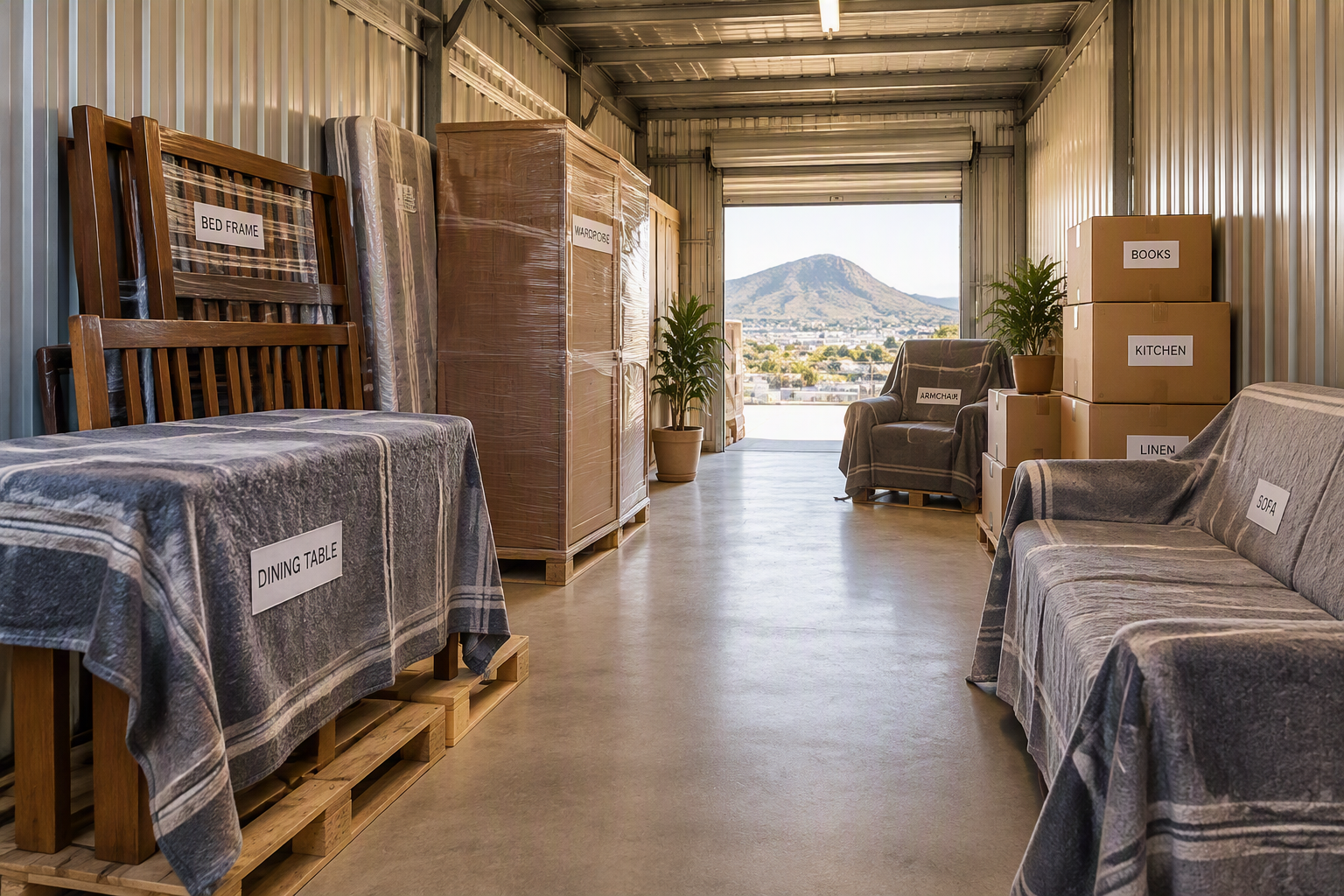
Furniture blankets and moving blankets help prevent scratches and dents during handling and storage.
Breathable furniture covers keep dust away while still allowing airflow around the item.
Bubble wrap is useful for fragile components such as glass panels, decorative pieces, and delicate fittings.
Mattress covers help protect mattresses from dust and dirt, while packing paper works well for delicate surfaces that could scratch easily.
Corner protectors provide an extra level of protection for tables, cabinets, and other furniture with vulnerable edges.
For long-term storage, breathable coverings are generally preferable to airtight plastic wrapping because they allow air circulation.
Avoid Moisture Traps
Moisture is one of the biggest threats to stored furniture.
When moisture becomes trapped, mould and mildew can develop. Wooden furniture may swell or warp, while upholstered items can absorb odours that are difficult to remove later.
For this reason, wooden and upholstered furniture should not be wrapped too tightly in plastic for long periods.
Furniture needs to “breathe” while still being protected from dust and debris.
Choose the Right Storage Environment
Where furniture is stored is just as important as how it is packed.
Not all storage environments offer the same level of protection, and choosing the right facility can have a major impact on the condition of your belongings.
When Is Climate-Controlled Storage Worth It?
Climate-controlled storage is designed to regulate temperature and humidity levels within the storage environment.
This can be beneficial because extreme temperature changes and excessive humidity can affect certain furniture materials over time.
Climate-controlled storage may be particularly worthwhile for:
Wooden furniture
Leather furniture
Antique furniture
Upholstered furniture
Valuable or sentimental pieces
It is important to note that climate-controlled storage is not always necessary.
However, for sensitive items or extended storage periods, it can provide valuable additional protection.
How to Arrange Furniture Inside a Storage Unit
Efficient organisation helps protect furniture while maximising available space.
A well-organised storage unit is easier to access, safer to navigate, and more practical to manage over time.
Keep Furniture Off the Floor
Furniture should never sit directly on a concrete floor.
Ground moisture and dirt can affect furniture over time, particularly during long-term storage.
Using pallets, raised platforms, protective barriers, or furniture risers creates separation between the furniture and the floor.
This improves airflow and helps reduce moisture-related risks.
Use Space Strategically
A little planning goes a long way when arranging a storage unit.
Place larger pieces against the walls to maximise available space.
Store heavier items at the bottom and lighter items above them where appropriate.
Take advantage of empty space inside drawers, cabinets, and wardrobes by storing smaller items within them.
Frequently accessed belongings should remain close to the entrance for convenience.
It is also wise to leave small walkways throughout the unit. Future-you will be grateful when you need to retrieve something without unpacking the entire space.
Mistakes to Avoid When Storing Furniture
Furniture storage is often less about what you do right and more about what you avoid doing wrong.
Common Furniture Storage Mistakes
One of the biggest mistakes is storing dirty furniture. Dirt and stains can become harder to remove over time.
Storing damp furniture is equally problematic as it increases the risk of mould, mildew, and unpleasant odours.
Wrapping everything tightly in plastic can trap moisture and restrict airflow.
Placing furniture directly on the floor exposes it to dirt and potential moisture issues.
Overloading furniture with heavy boxes can cause structural damage, particularly to tables, couches, and shelving units.
Blocking airflow within the unit can contribute to moisture build-up.
Choosing a storage unit that is too small often results in items being crammed together, increasing the likelihood of scratches and damage.
Finally, people sometimes forget to inspect items during very long-term storage. Occasional checks can help identify any issues before they become serious problems.
So, What’s the Best Way to Store Furniture?
The best furniture storage starts long before the items enter the storage unit.
Clean and dry furniture thoroughly, disassemble larger pieces where possible, and use protective materials that allow adequate airflow. Keep furniture elevated off the floor, organise the unit strategically, and consider climate-controlled storage for particularly sensitive or valuable items.
Most importantly, choose a reputable storage provider with secure facilities and storage solutions designed to keep your belongings protected.
Furniture storage is about far more than simply finding extra space. It is about preserving the condition, value, and lifespan of the items that make your house feel like home.
Whether you are moving home, renovating, travelling, or simply creating more space, storing furniture properly can help protect your investment for the long term. Explore our range of secure storage units and find the ideal solution for keeping your furniture safe, clean, and ready whenever you need it.
If you need the space, we have got the place for you. Contact us today.