
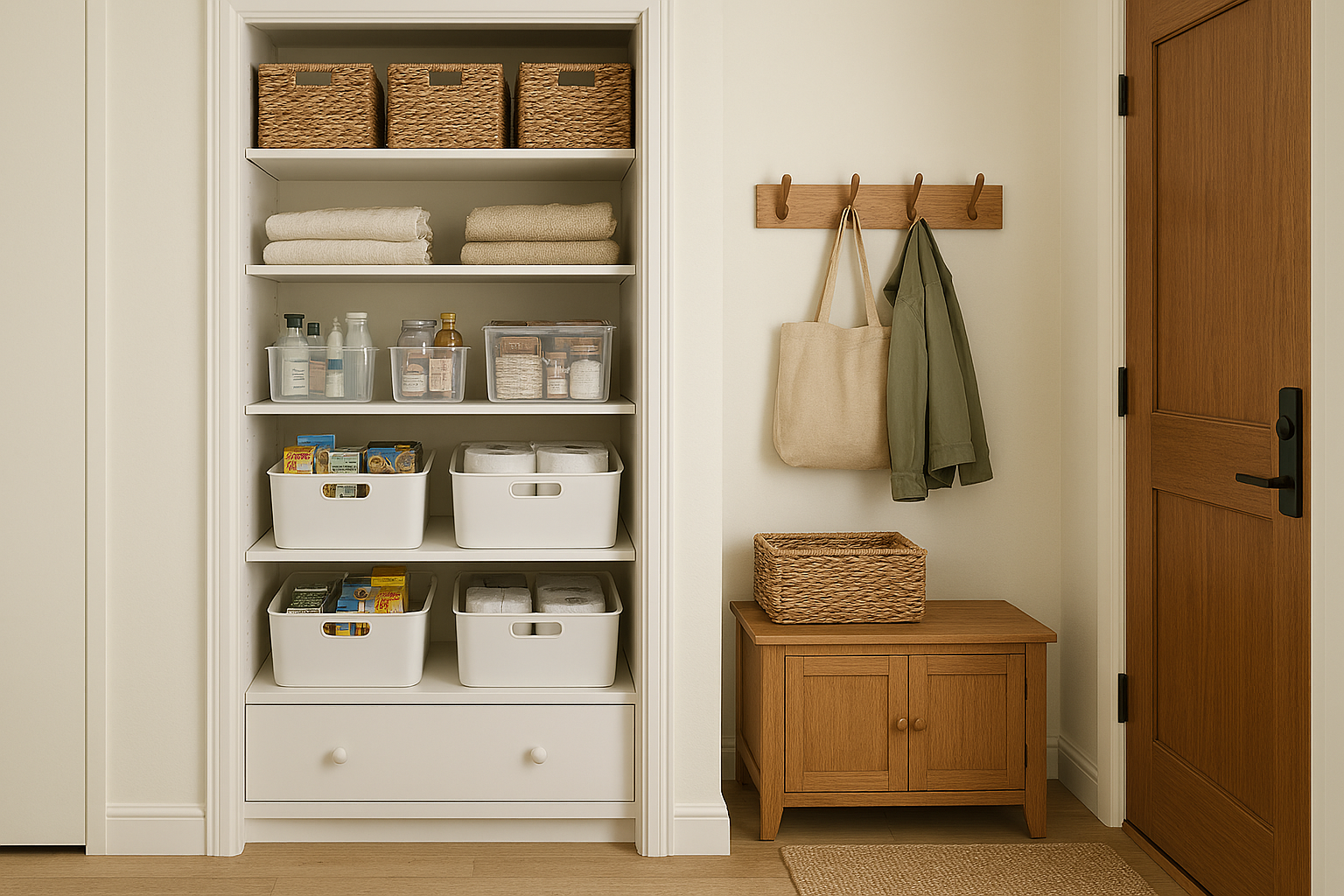
Many South Africans live in homes without built-in storage.
It is a widespread problem that is seldom talked about. It should be!
Someone’s mental state can literally take a turn for the worse when there is clutter everywhere.
They feel choked by a physical environment where cupboards fill up quickly, boxes are piled into corners, and everyday items compete for space on kitchen counters and bedroom floors.
However, “no storage” does not mean “no solutions.”
There are numerous storage ideas for small spaces that can take the load off. External solutions you might not have even thought about before can do the same.
These solutions are for real homes, not perfect ones.
Why Modern Homes Often Lack Storage Space
Today’s houses and flats have much smaller floor plans than was the case in years gone by. Built-in cupboards are less of a priority than they once were, resulting in rooms having to serve multiple purposes.
Those who rent seldom have permission to renovate and, for growing families, there is the issue of outgrowing their space long before they can afford to move.
If you fall into these categories, the solution is to work with what you have.
Start With Decluttering Before You Store Anything
You can’t even begin to think about household storage before you have decluttered.
There are many great decluttering tips that can help you change your space, and your life.
A fantastic example is to start decluttering one room at a time. Sort items into clear categories like “keep”, “donate”, “recycle”, “discard”, or “store”. This helps to keep decisions manageable.
If there is clothing that no longer fits you, give the items to charity. The same goes for kitchen appliances that just take up cupboard space.
Decluttering doesn’t only declutter your living space, it declutters your mind. It also allows you to identify what needs to be stored and what needs to be discarded.
Smart Storage Solutions Inside a Home with No Storage
You should explore household self storage that is practical.
There is not nearly enough of a case made for vertical storage. Wall-mounted shelves, hooks behind doors, and hanging organisers work wonders in freeing up floor space.
Your small space has areas that are under-utilised. You just need to look for them. Flat storage boxes can be housed under beds, for example.
Multi-purpose furniture like storage ottomans provide seating and conceal items. There is also no need for extra dressers when you might have a bed with built-in drawers.
It’s all about creating systems that work for you.
Using Containers and Organisation to Maximise Small Spaces
Clear or clearly labelled containers make it easier to find what you need. They can also be stacked to create additional space and improve functionality.
When In-Home Storage Isn’t Enough
There are cases where no amount of rearranging will solve the problem.
This is when it is time to start thinking about storage facilities. These make perfect sense if you’re downsizing, renovating, or travelling for long periods of time.
Storage facilities provide flexibility without forcing you to part with meaningful possessions.
What Types of Items Are Best Stored Outside the Home?
Items that do not require daily access are often best suited for off-site household storage.
Think about furniture that does not fit your current layout or sports equipment that goes unused for months, if not years, at a time. Seasonal household items can all be stored externally.
Removing these items from your living space can immediately improve functionality and make rooms feel less crowded.
The goal is not to store everything but make deliberate decisions about what needs to remain at home.
Common Storage Mistakes to Avoid in Small Homes
Storing items before decluttering simply relocates clutter. It’s strictly taboo.
Overfilling containers is another issue. Boxes that are too heavy or disorganised defeat the purpose of structured storage.
Failing to label stored items, another common mistake, often results in forgotten belongings. Keeping a simple list of what is stored and where can prevent frustration from boiling over.
How to Create a Storage Plan That Actually Works
Identify which items you use daily or occasionally.
Then decide what should stay in your home and what can be stored externally.
Your choice of storage method should suit each category.
As households change, your storage system should adapt. Flexibility is especially important for renters and families living in small spaces.
Final Takeaways: Living Comfortably Without Built-In Storage
Lack of built-in storage is common.
Decluttering is key.
Household self storage provides a practical and flexible extension of your living area.
Good storage supports better living.
If you need extra space to make your home work better for you, get in touch with the Big Storage team to find a storage solution that suits your needs.